
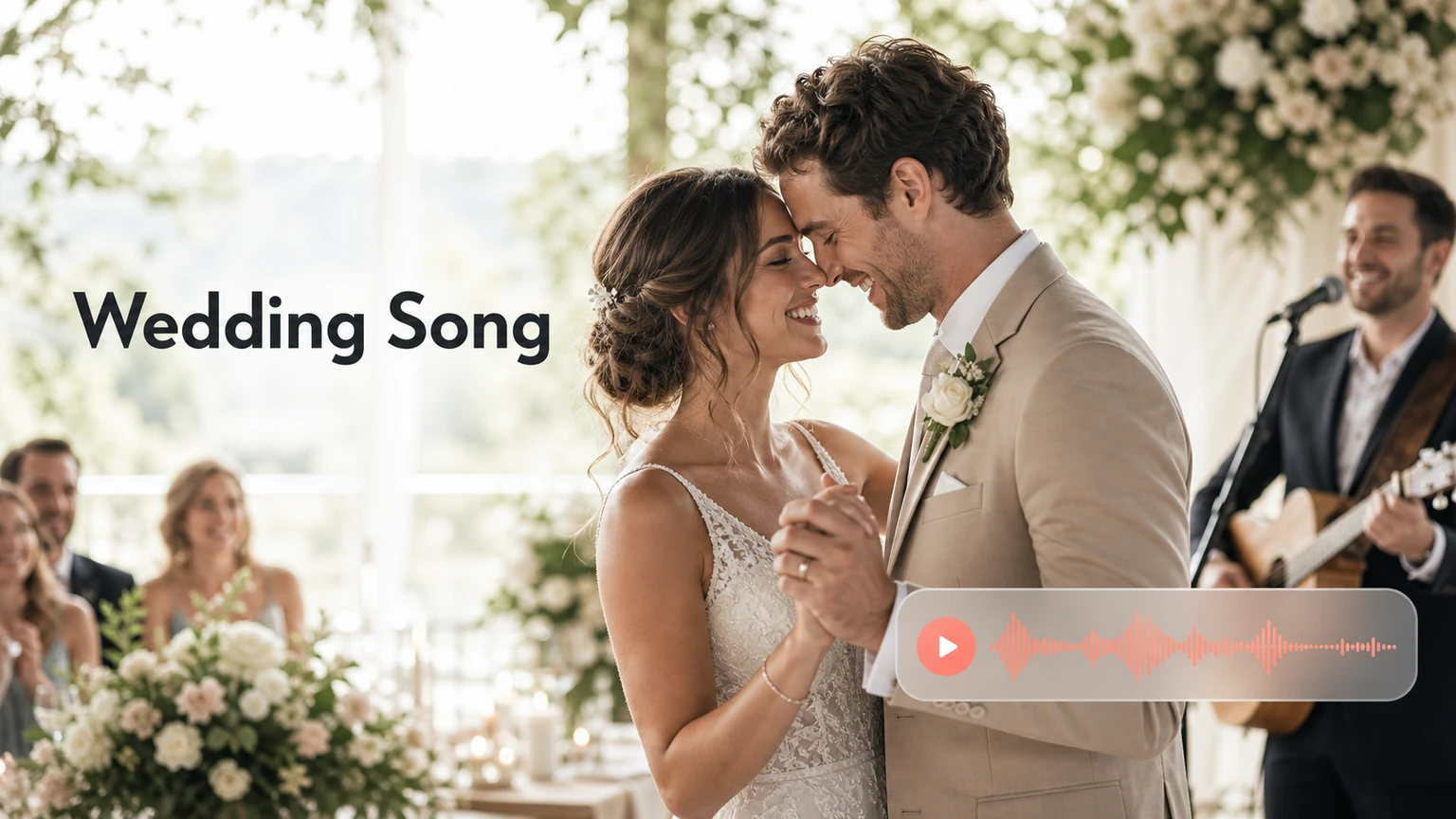
A wedding song should fit a real moment in the day. A processional, first dance, and reception video need different length, pacing, and lyric density. Start there before asking an AI wedding song generator to fill in the music.
The same workflow applies to personalized wedding song AI and AI love song generator; the source material changes, but the listening test doesn't.
Start with the decision that changes the result
Decide where the song will play, then choose the story and emotional peak around that moment.
Write the intended result as something you can hear or see. It will keep a flashy but wrong output from winning the comparison.
Build a brief around the actual task
Tie the prompt to the actual file, lyric, scene, or person involved. Extra mood words should earn their place.
Try this prompt
Create a couple’s real details into a wedding song. Base it on two people who met through a shared playlist and kept trading songs. Use romantic acoustic pop, with piano, strings, soft drums, and a clear duet-style refrain. Keep the first verse restrained, let the chorus open up, and finish without a long fade.
Build the arrangement around the use
The same song idea needs a different shape for headphones, a birthday video, a podcast intro, or background under speech. Decide the length and attention level before generating. Background music needs fewer melodic surprises. A personal song can let the hook step forward.
Generate at least two directions, then compare the opening, chorus, and ending rather than voting on the first ten seconds. One version may start better while another handles the vocal or groove more naturally. Keep notes in ordinary words: ‘drums too busy under the verse’ is more useful than ‘version two is bad.’
Correct the first wrong turn
If the result feels generic, add a real detail. If it feels crowded, remove one instrument and one mood word. If the chorus never lifts, describe the contrast you want instead of asking for ‘more energy.’ Small changes are easier to hear.
Keep a useful test note
Save the exact brief beside each result, because memory gets unreliable once you’ve heard several versions and the newest take starts sounding better simply because it’s new.
Easy mistake.
Write one sentence about the strongest moment and another about the first place your attention drifts, then revise only the instruction connected to that moment.
Leave everything else alone.
If you change the mood, instruments, vocal, pace, and structure together, you won’t know which choice fixed the song or which one caused a new problem.
A second listener can help, especially when you ask a narrow question such as whether the chorus arrives clearly, instead of asking if the whole song is good.
That’s enough feedback.
After two or three focused revisions, return to the original idea and check that the specific person, scene, or use hasn’t disappeared under production instructions.
Time the lyric to the event
For a first dance, place the most personal line before the final chorus rather than at the two-minute mark by accident. For a video, leave instrumental space under spoken clips. Test the exact edit while people are moving, not only through headphones.
Pick one failure you can point to in time. Ask for a different behavior at that moment and compare again.
Complete the workflow in Musiko AI
Musiko AI keeps the starting point simple for a beginner: build the lyric first, generate two versions, and choose the one whose pacing fits the wedding moment. Easy Mode works when a plain description is enough; Custom Mode is better when lyrics or vocal direction need separate control.
Listen or watch once for the main job, not for general polish. Record why one version handled that job better.